


The 344th episode of our 12 Questions segment features producer Draso.
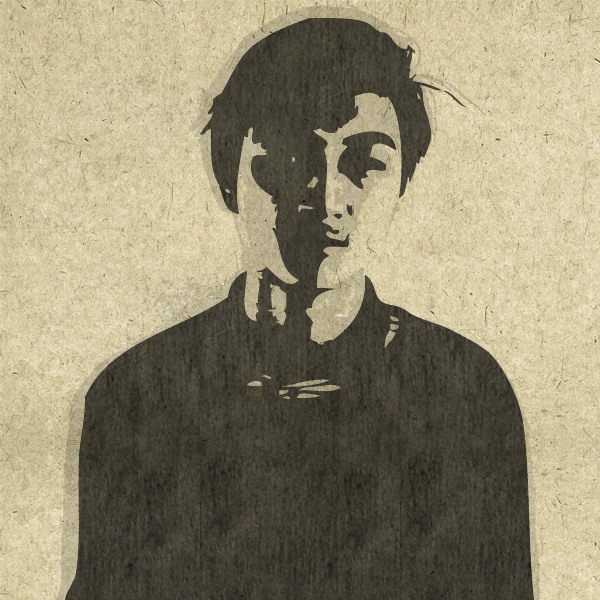
1. How old are you, where are you living and how long have you been producing and Djing?
I’m 24 years old from Melbourne, Australia. I bought my first pair of turntables when I was 14 after having saved enough money from working at a fish and chips shop for 18 months on well below minimum wages. Every weekly pay check after that would go towards new records. I started producing my own music when I was 18.
2. Where do your musical roots lie, what are your first memories of electronic music and when did you know you wanted to pursue it seriously? Are there any particular productions or artists from the past that really made you think to yourself ‘this is what I want to do.”
I was first exposed to electronic music when I was about 10, before that I played piano and trumpet for about 8 years. I remember my brother and his friends sharing a lot of the early 90’s/early 2000’s trance and house music, everything from James Holden, Above & Beyond, Chicane, Gabriel & Dresden, Sasha etc. I wouldn’t say any of them made me think this “this is what I want to do”, but at the time I was just fascinated with how the technology worked and I was just curious as to how electronic music was made. Tracks like Holden’s ‘Nothing’, Chicane’s ‘Saltwater’ and ‘Don’t Give Up’, Above & Beyond’s ‘Tri-State’ album and Gabriel & Dresden’s original cuts of ‘Tracking Treasure Down’ and ‘Beautiful Things’ were some tracks that come to mind when taking that trip down memory lane. Back then I was really into the music coming out of Anjunabeats/Anjunadeep. Just listening to those tracks again is extremely nostalgic. Eventually though I wanted something deeper with a bit more of a story/concept, something with a bit more personality and character behind the music. I got into artists like Gui Boratto, Trentemoller, Max Cooper, Ryan Davis, Stimming, Robert Babicz, Stephan Bodzin, Extrawelt, Paul Kalkbrenner, Kollektiv Turmstrasse and Minilogue, to name a few. A lot of the early releases on Traum Schallplatten and Kompakt were also hugely influential in my introduction to techno/house and away from trance.
I still don’t even know if it’s something ‘I want to pursue seriously’, I just do it because its fun, it’s an escape, it’s therapeutic and at the end of the day it’s another creative output, which my brain seems to crave.
3. How difficult was learning to produce for you in the beginning? Did you take any Audio Engineering programs or production courses to help you out or are you pretty much self taught? And did anyone give any advice early on that really helped?
I am completely self taught, and its an endless learning process, and that’s what I love about it and also why I prefer it over DJing because there’s always something new to explore and something new to learn and I find myself constantly trying to improve my sound. I find it really humbling in that sense because it makes you realise you don’t know everything about production as there’s always new technique to learn or implement in a track. So yeah it was difficult to learn, it still is, but that’s where the fun lies. I was producing for four years before releasing my first track, and if I didn’t find it fun I probably wouldn’t of persisted for that long.
In terms of advice, surprisingly I would say my architecture degree helped the most with my musical output. I realised more and more that the two share more than a few parallels in the conceptual thinking but also the production techniques. When I first started producing I would basically just go through internet forums where other producers would talk about techniques, and I remember the phrase ‘less is more’ would constantly come up. I heard that same phrase the following week in a first-year architecture lecture that was talking about Mies van der Rohe’s Farnsworth House. That was a pretty big moment for me because from that point on I realised how everything I learnt in architecture could then be applied into my music production. My first release with the German based label Traum Schallplatten was basically about that realisation.
Other architects like Peter Zumthor helped me realise that music is all around us in the form of ambient sounds, and those kind of soundscapes both the intentional and incidental soundscape, is something that I’ve lately been really trying to bring into my music through field recordings and processing.
4. What parts of the production process do you find the most difficult and what comes easiest for you? When you do hit a creative block what helps you through it?
Sound design and synthesis is the most difficult, but it’s also the most fun and most satisfying… so interpret that however you want. Once the basic outline and arrangement of a track is written, everything follows pretty naturally. The mixdown process is only ever difficult if the sound design and synthesis is done poorly from the beginning. That being said if I’ve spent more then a few days on a track and it’s still not finished, it usually means it’s not good enough. All of my best tracks I’ve written in a day, with another day spent on the mixing and EQ. I find if im spending too much time on the mixdown and EQ then it usually means I’ve chosen the wrong sounds to begin with, so all of these processes (writing/recording, sound design/synthesis, mixing and EQ) are happening concurrently for me. All that said, there’s never really been a method for my productions, they all started differently. Some start with a groove, others with a chord progression, others with a melodic riff, or sometimes just from a field recording (my track Fomalhaut – which sampled a whole bunch of instruments and tribal performances when I was in Indonesia).
If I get a creative block I look for other sources of inspiration. I try to find inspiration from anything: architecture, landscapes and nature, reading, film, people. It’s kind of a cliché thing to say but life is full of inspiration, its everywhere if you actually bother to look for it and persist in making something out of it.
5. What’s a normal day like for you? Do you have a job outside of electronic music? And what do you like to do when you’re not working on music?
I just finished my Masters degree in Architecture and just started work at an architectural practice so if its not music I’m in the office drawing and drinking way too much coffee.
6. Apart from electronic music what other genres do you listen to and who are your favourite artists outside of electronic? and do these genres or artists have a direct effect on your own productions?
I listen to a lot of ambient, soundtrack and contemporary classical. Artists like Nils Frahm, Olafur Arnalds, Tycho, Thomas Newman, Tim Hecker, Steve Price, Brian Eno and Steve Reich. A lot of music from Erased Tapes Records never ceases to impress when it comes to that kind of music. Artists like Rival Consoles has been making some really special music lately, his productions are fucking mind-blowing to say the least. Just really different, really organic, lots of energy, and his music is full of personality, character and texture. I’m sure in some kind of sub-concious way they have an effect on my own productions… I almost listen to this kind of music more than I do techno and house these days even though I mostly produce techno and house.
7. What was the first and last physical (CD, Vinyl, Cassette etc) piece of music you bought?
The first physical release I had was Above & Beyond’s Anjunabeats Vol. 1 from 2003 and the last would probably be Pablo Bolivar’s ‘The People We Like’ EP.
8. Tell us something about yourself that might surprise people?
I wrote my Masters thesis on “Architecture as an Instrument for Music: How new Definitions of Music Resituate Architecture as an Audio-Temporal Experience”. To try and sum up a 10 thousand word paper, I basically discussed the potential of music as a generative tool for architectural form, and sound as an essential factor to how we experience, perceive and understand architectural space. From the start I remember thinking how stupid this would be for a thesis paper considering the array of other world issues that needed addressing such as sustainability. But I chose it because I just wanted to write about something I was actually interested in, and funnily enough it ended up being one of my best grades at university.
9. Which producers in your opinion get consistently overlooked?
Pablo Bolivar lately has been releasing some really good music lately, he has a really refreshing take on house music, and a lot of the music coming out of his own label Seven Villas are from relatively unknown producers, but a lot of the tracks are really special. ‘Illusion’ by Indigo Minds is one that comes to mind. Lauren Ritter is also releasing a lot of really good music at the moment. That being said, I don’t really know if they get overlooked… but I do think more people should listen to their music.
10. Which producers consistently inspire you? And where else does your inspiration come from?
Nils Frahm’s work is always really impressive, I’m not sure how he does it but his sound (albeit it being classical) seems to have so much character, personality and texture. I saw him live a few years ago for Melbourne Music Week, and its still probably one of the most impressive live shows I’ve ever seen. The guy is an absolute maestro… he has like four pianos on stage. In the last few years since I’ve been following his work, I’d say he’s been the most influential both for my own music but also my architecture as well.
Steve Reich – Music for 18 Musicians.
I got introduced to this only last year when a lecturer at university played it. Since then I’m pretty sure it’s almost at the top of my ‘most played’ on my computer. It was made in the 70’s and it’s just incredibly ahead of its time.
11. There are countless producers out there trying to find their way and create their own unique sound, what advice do you have for them?
Don’t expect the unique sound to come overnight and don’t ever expect to ‘perfect’ your sound. Imperfections give character, and character makes the music sound more human.
In this day and age with so much digital synthesizers and software readily available, the whole scene is flooded and diluted and I find this human quality in electronic music is now more important than ever.
Most of all, be patient and be yourself through your music. To put things into perspective, I’ve been producing since 2010 and only started releasing my own music in 2014. Since I started producing I’ve got over a thousand projects but only released around 15 tracks. Just keep working, because the more you practice and develop your own sound (whether people like it or not is irrelevant), the more refined it eventually gets.
Whether you use analog or software, just use a few synths (one for bass, one for chords, another for melodic riffs, and a drum machine) and completely explore the full potential of just those synths, learn them in and out. I realised that the hard way – I remember having about 20 different synthesizers loaded in my DAW when I first started out, but I’ve reduced it to about 3-4 key synths now and since then my productions have become a lot more refined and my workflow has become a lot more streamlined. Having too many options just slows the creative process – less is more. That being said I am turning into a bit of an analogue collector of synths. Each synth just has their own character… I think of them like colours and tones, and the arrangement as the canvas.
12. If the final DJ/live set of your career was next week what would your last track be?
That’s tough… I have no idea, it would depend on the setting and time of day. Maybe ‘Radiance’ by Tim Hecker, or maybe ‘Pink Trees (On The Couch Journey Mix)’ by Robert Babicz… or maybe ‘Where The Heart Is’ by Jeremy.
‘Strum’ is out now on Wide Angle Recordings, you can purchase the release: here


